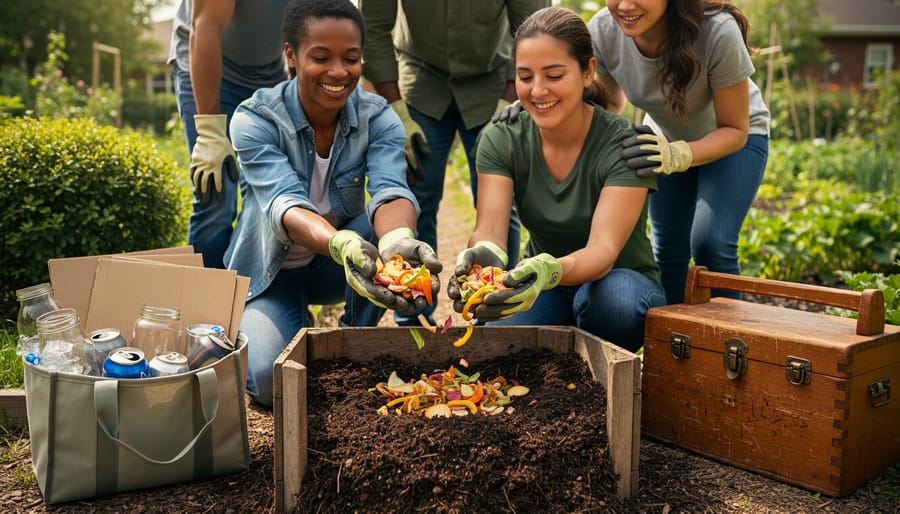
“Volunteers add food scraps to a composting bin while sorted recyclables and tools sit nearby, illustrating shared long-term environmental program sustainability.”

Program Sustainability: How to Build, Fund, and Keep Your Environmental Initiative Running

Program sustainability means designing environmental initiatives to thrive long after the initial excitement fades and startup grants run dry. It requires building community ownership, diversifying funding streams, embedding programs into existing institutions, and creating clear systems that survive staff turnover. When done right, a waste reduction program launched by a handful of volunteers in 2023 can still be sorting compost, educating residents, and diverting tons from landfills three years later without the original…
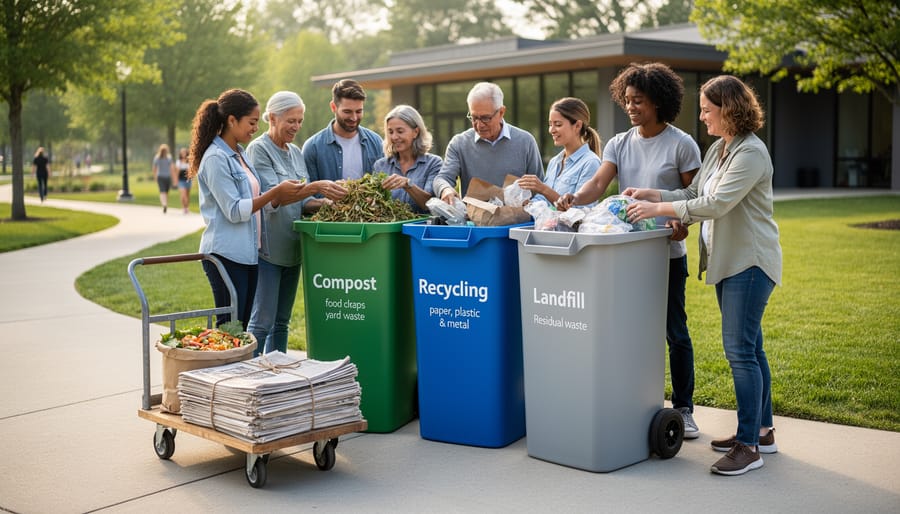
Community members sorting food scraps and recyclables at an outdoor waste collection area with compost and recycling bins.

Waste Reduction Programs: How They Work and Why Your Community Needs One

Waste reduction programs are structured initiatives that help communities, businesses, and institutions systematically decrease the amount of waste they send to landfills through prevention, reuse, composting, and recycling strategies. These programs work by identifying waste streams, setting measurable reduction targets, and implementing practical systems that make it easier for participants to divert materials from disposal. The most effective programs combine clear infrastructure (like convenient collection points), education (helping people understand what goes where), and accountability (tracking progress over time).
Right now…